11 weeks pregnant
At 11 weeks, fingers and toes are separating, tiny nails are appearing and the fetus can open and close its hands. Many people have their dating ultrasound and first-trimester screening in the next few weeks.
This page covers 11 weeks 0 days to 11 weeks 6 days (11+0 to 11+6), counted from the first day of the last period. Check how far along you are
Enter it to see the calendar dates of your week 11.
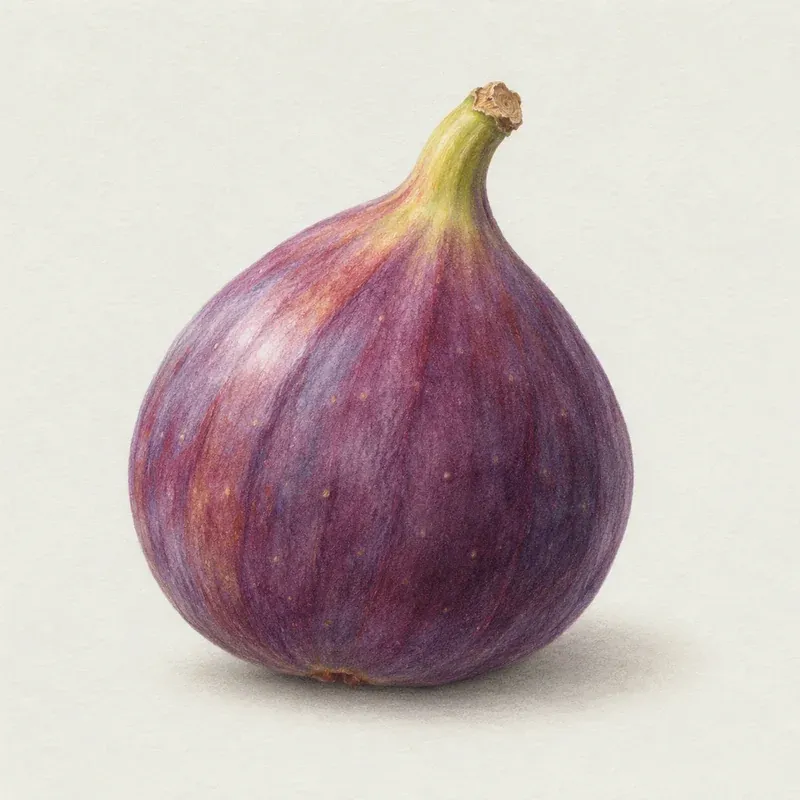
About the size of a fig
Typical crown-rump length 4.4 cm to 5.4 cm (1.7 in to 2.1 in) across this week, from the Robinson equation.1
A reference value, not a measurement of your baby.
How your baby is developing
- Fingers and toes are separating, and tiny nails are starting to appear. The limbs are long and thin.2,3
- The fetus is starting to open and close its fists and mouth. Knees, elbows and ankles are working, and the bones are hardening.4
- The head is still about half the size of the body, but the body is growing quickly. The face is well formed and tooth buds are appearing.2,3
- Around now, the liver is making red blood cells and the genitals are appearing, though they cannot yet be seen on a scan.3,4
- Until now, the yolk sac has helped nourish the embryo. The placenta is about to take over the job of providing nourishment and removing waste.2
Changes you may notice
Everyone’s experience is different. You may notice some of these, or none.
- Your body is pumping up to 50% more blood than usual. This supports your uterus but can make you feel hot, sweaty or dizzy.2
- As your uterus grows, muscles and ligaments stretch and you may feel aches around your abdomen. If the pain is strong, see your midwife or doctor as soon as possible.2
- Tiredness is still common. Gentle exercise such as walking may help you feel better.2
- Nausea, heartburn, headaches, mood swings, sore breasts and bloating can continue for now. Not everyone has all of these.2
Care around this week
- In the US, first-trimester screening is done between 10 weeks 0 days and 13 weeks 6 days, and cell-free DNA screening can be done from 10 weeks. An ultrasound up to 13 weeks 6 days is the most accurate way to date a pregnancy.5,6
- UK note: a dating scan is offered between 11 and 14 weeks (NICE gives 11 weeks 2 days to 14 weeks 1 day). It checks how many weeks pregnant you are, whether there is more than one baby, that the pregnancy is in the right place, and early development.7,8,9
- UK note: if you choose screening for Down's, Edwards' and Patau's syndromes, the fluid at the back of the baby's neck (nuchal translucency) is usually measured at the dating scan and combined with a blood test.9,10
Questions to ask your provider
- When is my dating ultrasound, and will it change my due date?
- Do I need a full bladder for my scan?
- How and when will I get my screening results?
- Is the abdominal aching I feel normal, or should I get it checked?
When to contact your provider straight away
Call 911 (US) or 999 (UK) in an emergency, such as heavy bleeding or bleeding with severe pain, a seizure, chest pain, or severe trouble breathing.11,12,13,14
These symptoms are not always serious, but each one needs prompt advice from your provider, midwife or maternity unit (or NHS 111 in the UK if you cannot reach them) rather than waiting for your next appointment, and it helps to tell them you are pregnant.
- Vaginal bleeding or spotting at any stage of pregnancy. Call 911 or 999 if the bleeding is heavy or comes with severe belly pain, shoulder pain, or feeling faint or dizzy.13,15
- Fluid leaking or gushing from your vagina, or discharge that is unusual for you. Get checked straight away if the fluid is greenish, colored or smells bad.13,14,16,17
- Your baby moving less than usual, not moving, or a change in their usual pattern of movements. Call immediately, even in the middle of the night, and do not use a home Doppler to check yourself.13,18
- A severe headache that does not go away with simple painkillers or gets worse, or sudden changes in your vision such as blurring or seeing flashing lights.11,13,14
- Sudden swelling of your face, hands or feet, or swelling, redness or pain in a leg.11,13,14
- Belly pain that is severe or does not go away after resting, or pain just below the ribs.11,13,19
- Regular tightenings or contractions, period-type pains, or backache that is unusual for you before 37 weeks, which can be signs of preterm labor.17,19
- A fever of 100.4°F (38°C) or higher, or feeling hot, cold or shivery.13,14,17
- Shortness of breath that comes on suddenly or happens when you lie flat, chest pain, a racing or pounding heart, or dizziness or fainting.13,14
- Very itchy skin, especially on the palms of your hands or soles of your feet, or itching that is worse at night.20
- Being sick so often that you cannot keep food or drink down, or signs of dehydration such as dark urine, peeing very little, or feeling dizzy.13,21
- Thoughts of harming yourself or your baby. Get help right away, and call 911 or 999 if you think you might act on them.13,22
Questions about 11 weeks
What is a nuchal translucency scan?
It is an ultrasound measurement of the fluid at the back of the baby's neck. Combined with a blood test, it is used to screen for Down's, Edwards' and Patau's syndromes, and in England it is usually done at the dating scan.9,10
Do I need a full bladder for my dating scan?
You may, as a full bladder can make the ultrasound image clearer. Ask your midwife or doctor before the scan. In England the dating scan usually takes about 20 minutes.9
Will I feel the baby move at 11 weeks?
Not yet. The fetus is moving, but you probably will not feel anything for several more weeks.2
Sources
- A critical evaluation of sonar “crown-rump length” measurementsBritish Journal of Obstetrics and Gynaecology 82(9):702–710, 1975
- Week 11 – week-by-week guide to pregnancyNHS Best Start in Life
- Fetal developmentUS National Library of Medicine
- Fetal development: stages of growthCleveland Clinic
- Practice Bulletin No. 226: Screening for Fetal Chromosomal AbnormalitiesAmerican College of Obstetricians and Gynecologists, 2020
- Committee Opinion No. 700: Methods for Estimating the Due DateAmerican College of Obstetricians and Gynecologists, with AIUM and SMFM, 2017
- Your antenatal appointmentsNHS (England)
- Antenatal care (NG201)National Institute for Health and Care Excellence, 2021
- 12-week scanNHS (England)
- Screening for Down's syndrome, Edwards' syndrome and Patau's syndromeNHS (England)
- Pre-eclampsiaNHS (England)
- Epilepsy and pregnancyNHS (England)
- Urgent Maternal Warning Signs and Symptoms (Hear Her campaign)US Centers for Disease Control and Prevention
- Pregnancy symptoms you need to get help forNHS (England)
- Vaginal bleeding in pregnancyNHS (England)
- Signs of going into labourNHS Best Start in Life
- Premature labour and birthNHS (England)
- Your baby's movementsNHS (England)
- Stomach pain in pregnancyNHS (England)
- Itching in pregnancyNHS (England)
- Severe vomiting in pregnancyNHS (England)
- Depression in pregnancyNHS (England)
Links checked November 12, 2026. Citing a source does not mean it endorses this site.
Written from the sources above and checked against them on 2026-11-12. Not reviewed by a clinician. Our editorial policy