35 weeks pregnant
At 35 weeks your baby keeps gaining weight and fat, which will help with temperature control after birth, and the brain is still growing. Space is tight, but movements should feel as strong and regular as before. Group B strep screening and labor pain relief are common topics now.
This page covers 35 weeks 0 days to 35 weeks 6 days (35+0 to 35+6), counted from the first day of the last period. Check how far along you are
Enter it to see the calendar dates of your week 35.
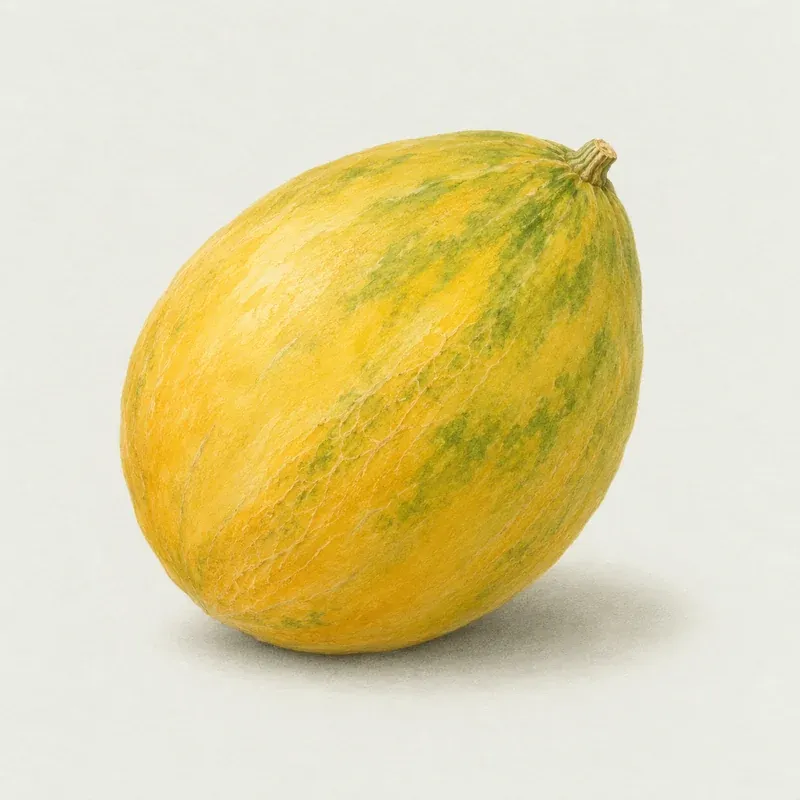
About the size of a Crenshaw melon
Typical estimated weight 2.6 kg (5 lb 12 oz) at 35+0, about 2.78 kg (6 lb 2 oz) by 35+6. This is the 50th centile; healthy babies commonly vary by about 12.7% either way.1
A reference value, not a measurement of your baby.
How your baby is developing
- The fat your baby is adding now will help them stay at the right temperature after birth.2
- Weight keeps rising, though length may not increase much more. The skin becomes less wrinkled as fat builds underneath.3
- The brain is still growing and has not yet reached its weight at birth.4
- By around 35 to 37 weeks, distinct sleep patterns are established, and the heart, blood vessels, muscles and bones are complete.3
- The lungs are nearing full development.4
Changes you may notice
Everyone’s experience is different. You may notice some of these, or none.
- Space is tight, but you should still feel your baby move as strongly and regularly as in previous weeks. If movements change or stop, contact your provider or maternity unit straight away, even at night.2,5
- Sore ribs can come from a head-down baby kicking. Tell your provider about severe pain or pain just under your ribs, in case it is a sign of a condition called preeclampsia.2
- Yellow marks in your bra are likely colostrum. Milk usually comes in around 3 to 5 days after the birth, and a nursing bra with room to grow and breast pads may help.2
- Leaking a little urine when you laugh or cough is common as the pelvic floor relaxes ahead of birth. Pelvic floor exercises can help.6
Care around this week
- US: universal group B strep screening is done at 36 weeks 0 days to 37 weeks 6 days, so it is often coming up soon. UK: NHS suggests talking to your midwife about group B strep, which up to 2 in 5 people carry; most newborn infections are preventable.2,7
- US: Tdap is recommended through week 36, and the maternal RSV vaccine is given at 32 to 36 weeks during September through January in most of the country. If you do not get the RSV vaccine, an RSV antibody is recommended for your baby after birth. UK: the RSV vaccine can be given up until labor, and it is not too late for the whooping cough vaccine.2,8,9,10
- Labor pain relief is often discussed now. Options NHS describes include relaxation and moving around, gas and air, pethidine, an epidural, a birth pool and a TENS machine. You can record choices in a birth plan and still change your mind on the day. UK: a check around 36 weeks includes feeling your bump to find your baby's position.2,11
Questions to ask your provider
- When will I have my group B strep test, and what happens if it is positive?
- Which pain relief options are available where I plan to give birth?
- Is it still worth getting the Tdap or RSV vaccine at this point?
- What should I do if I think labor is starting before 37 weeks?
When to contact your provider straight away
Call 911 (US) or 999 (UK) in an emergency, such as heavy bleeding or bleeding with severe pain, a seizure, chest pain, or severe trouble breathing.14,15,16,17
These symptoms are not always serious, but each one needs prompt advice from your provider, midwife or maternity unit (or NHS 111 in the UK if you cannot reach them) rather than waiting for your next appointment, and it helps to tell them you are pregnant.
- Vaginal bleeding or spotting at any stage of pregnancy. Call 911 or 999 if the bleeding is heavy or comes with severe belly pain, shoulder pain, or feeling faint or dizzy.16,18
- Fluid leaking or gushing from your vagina, or discharge that is unusual for you. Get checked straight away if the fluid is greenish, colored or smells bad.16,17,19,20
- Your baby moving less than usual, not moving, or a change in their usual pattern of movements. Call immediately, even in the middle of the night, and do not use a home Doppler to check yourself.5,16
- A severe headache that does not go away with simple painkillers or gets worse, or sudden changes in your vision such as blurring or seeing flashing lights.14,16,17
- Sudden swelling of your face, hands or feet, or swelling, redness or pain in a leg.14,16,17
- Belly pain that is severe or does not go away after resting, or pain just below the ribs.14,16,21
- Regular tightenings or contractions, period-type pains, or backache that is unusual for you before 37 weeks, which can be signs of preterm labor.20,21
- A fever of 100.4°F (38°C) or higher, or feeling hot, cold or shivery.16,17,20
- Shortness of breath that comes on suddenly or happens when you lie flat, chest pain, a racing or pounding heart, or dizziness or fainting.16,17
- Very itchy skin, especially on the palms of your hands or soles of your feet, or itching that is worse at night.22
- Being sick so often that you cannot keep food or drink down, or signs of dehydration such as dark urine, peeing very little, or feeling dizzy.16,23
- Thoughts of harming yourself or your baby. Get help right away, and call 911 or 999 if you think you might act on them.16,24
Questions about 35 weeks
Why do my ribs hurt at 35 weeks pregnant?
A head-down baby kicking up into your ribs can make them sore. If the pain is severe or sits just under your ribs, tell your provider in case it is a sign of preeclampsia.2
Sources
- In utero analysis of fetal growth: a sonographic weight standardRadiology 181(1):129–133, 1991
- Week 35 of pregnancyNHS Best Start in Life
- Fetal developmentUS National Library of Medicine
- Fetal development: stages of growthCleveland Clinic
- Your baby's movementsNHS (England)
- Week 36 of pregnancyNHS Best Start in Life
- Committee Opinion No. 797: Prevention of Group B Streptococcal Early-Onset Disease in NewbornsAmerican College of Obstetricians and Gynecologists, 2020
- Tdap Vaccination for Pregnant WomenUS Centers for Disease Control and Prevention
- Protecting Infants from RSVUS Centers for Disease Control and Prevention
- Vaccinations in pregnancyNHS (England)
- Your antenatal appointmentsNHS (England)
- Committee Opinion No. 579: Definition of Term PregnancyAmerican College of Obstetricians and Gynecologists, 2013
- Preterm laborUS National Library of Medicine
- Pre-eclampsiaNHS (England)
- Epilepsy and pregnancyNHS (England)
- Urgent Maternal Warning Signs and Symptoms (Hear Her campaign)US Centers for Disease Control and Prevention
- Pregnancy symptoms you need to get help forNHS (England)
- Vaginal bleeding in pregnancyNHS (England)
- Signs of going into labourNHS Best Start in Life
- Premature labour and birthNHS (England)
- Stomach pain in pregnancyNHS (England)
- Itching in pregnancyNHS (England)
- Severe vomiting in pregnancyNHS (England)
- Depression in pregnancyNHS (England)
Links checked November 12, 2026. Citing a source does not mean it endorses this site.
Written from the sources above and checked against them on 2026-11-12. Not reviewed by a clinician. Our editorial policy